To book a speaking engagement with Patty Hamrick, please reach out at to me by email. The following is the full list of events I currently offer. As originally written, all lectures are 1.5 hours long. My speaking fees are flexible.
We can also build a custom program together!
The Real History of Cave Paintings
 Fifty thousand years ago, the world experienced its first artistic movement. The pieces of art created at that time are beautiful, important, and still mysterious. They are the famous cave paintings of Lascaux and other European sites. If you’ve encountered these artworks in museums, history classes, or on TV, and wanted to know more, this is the class for you.
The cave paintings of the Upper Paleolithic (that’s a technical term for the late Ice Age) continue to raise questions today: Were they religious? Erotic? Good luck symbols made by superstitious hunters? Do they show the evolution of the human brain? Why did no one make art before this? How were the paints and brushes made? And most of all, who created these works of art? (Was it… aliens?)
This talk will provide an introduction to the wide variety of Upper Paleolithic art, from the backstories of famous paintings you’ve seen before to new discoveries and obscure finds. We’ll cover the current archaeological theories as to how and why these earliest examples of humanity’s artistic drive came into being.
This class requires no prior knowledge of history or art, but come prepared to explore the fundamental role of art in defining what it means to be human.
The African Burial Ground: Black Archaeology in Early NYC
 For two hundred years they waited beneath lower Manhattan, entirely forgotten. Even after their recent rediscovery – which occurred by accident during the construction of a new office building –their importance was denied, debated, and almost destroyed. Who are ‘they’? The thousands of African-Americans who lived in New York City during the 1600s and 1700s. After world-wide protests by activists, they finally received the recognition they deserved when their graves, known as the African Burial Ground, were declared an official national monument in 2006.
African-Americans were already here when this city was New Amsterdam. Both free and enslaved, they helped to build and influence the NYC we live in today. Archaeological research at the African Burial Ground has taught us about the lives, deaths, cultural practices, and religious beliefs of this diverse community. These discoveries led to the site being called “one of the most significant American archaeological finds of the twentieth century”.
This lecture-based class will cover important and fascinating events of NYC’s early history that are reflected in the African Burial Ground, including the transfer of the city from Dutch to British authorities, the slave rebellions of 1712 and 1741, the 1788 Doctors’ Riot, and the Revolutionary War.
The Archaeology of Cats and Dogs
 While many animals today face the threat of extinction, the numbers of dogs and cats are only climbing. They’ve tagged along at humanity’s heels since the Ice Age, an important part of our quest for world domination. But how did they evolve from wild predators into pampered pets?
This class will explore the long and fascinating history of cats and dogs. Did you know that dogs are the world’s first domesticated animal? Or that cats probably domesticated themselves – and are still mostly wild today? We’ll study the DNA of wolves and wildcats to learn when and where our constant companions were first introduced to our homes. We’ll trace their spread across the globe through fossils and footprints. We’ll look at Egyptian mummies, Roman mosaics, Aztec temples, and Chinese tombs to see how different cultures have treated these two fascinating species. We’ll even investigate the origin of some of today’s most popular breeds – was your furry friend originally raised to hunt rats or to fit inside a royal lady’s sleeve?
They’ve been gods and guards, food, witch’s familiars, hunters, pack animals, sacrifices, and much, much more – the only constant has been their important place by human’s side. Come learn about the archaeology of cats and dogs: it might surprise you!
Resurrecting the Woolly Mammoth
 Woolly mammoths have been extinct for nearly 10,000 years, but soon they may walk again. Teams of scientists are currently working on recreating the woolly mammoth through cloning and gene migration. If they are successful, the woolly mammoth could be one of the first extinct species to ever be resurrected!
This class will cover the fascinating past of the woolly mammoth and its cousin, the mastodon. Both animals once covered the globe from North America to Europe and Asia, but how much do you know about these Ice Age giants? Get ready to take care of one of your own by learning about their diet, behavior, appearance, environment, and, of course, their eventual extinction, which some people think may have been the first caused by humans. We’ll also study the science of how to recover ancient DNA, clone an animal, and deal with the practical and ethical problems of de-extinction.
No prior knowledge of science or archaeology is necessary. This class probably won’t allow you to actually build your own Jurassic Park, but you’ll come away with a better understanding of how everything old might be new again.
Haunted History: Bog Bodies of Iron Age Europe
 “Bog bodies”: the eerily well-preserved remains of hundreds of people – men, women, and children – found in the swamps and peaty wetlands of northern Europe. Many times police have been called to what appears to be a modern murder scene, only to discover that the body dates back to the Iron Age, over two thousand years ago. The incredible protection provided by the bogs may be frightening for people who stumble across them, but it means modern archaeologists are able to reconstruct a great deal about these ancient dead. We know how they lived their lives, what they looked like, and even what they ate for their last meal.
One startling thing archaeologists have learned is that most of the bog bodies died violently before their burials hidden beneath the peat. Roman writers claimed this practice was a way of executing criminals and adulteresses. Medieval explorers thought they were the remains of legendary kings and queens who were betrayed by their followers. Others believe these people were human sacrifices to the gods of fertility and good luck.
In this class, we’ll discuss who the bog bodies were during life, how they died, and the science behind their amazing preservation. This October, come and learn about some spooky history!
Seneca Village and the Archaeology of Central Park
 Before the grid system, before Central Park, before the Civil War, there was Seneca Village. A small town of around three hundred people, Seneca Village was the home of free African-Americans and recent immigrants from Germany and Ireland. It was a center of diversity, political activism, and an important stop on the Underground Railroad. Then, in 1857, it was violently razed to make way for the future Central Park.
The Park also hides many other parts of NYC’s history, including archaeological remains of Revolutionary War fortifications, New York’s first highway, and the city’s first public water system. In this class, we’ll cover the battles over choosing a location for the Park, the famous designers who planned its look, and the massive construction project that went into building the Park – it may look natural and wild, but it’s all man-made!
How well do you really know Central Park? Come to this class and find out all its secrets.
No prior knowledge of archaeology or NYC history required! This is a classroom session and not a walking tour.
The Archaeology of Beer
 It’s been found in the Egyptian pyramids, the cities of Mesopotamia, Viking longboats, the palace of Machu Picchu, medieval monasteries, and the world’s earliest farming villages. What is it? Beer!
Beer is as old as human civilization, and has been made in almost every part of the world for thousands of years. It has been used to pay taxes, heal the sick, and accompany the dead into the afterlife. Many religions worshiped gods and goddesses of beer and brewing, and some of the earliest known examples of both poetry and law codes are about beer.
However, most of these beers were nothing like a modern-day Budweiser. Some were as thick as porridge. Others were flavored with rosemary and juniper berries, twigs of pine or spruce, or spices like cinnamon, coriander, and ginger. Even the basic ingredients differ: beers have been made of corn, rice, and even a mixture of flowers and honey ants!
Join us for an evening exploring the archaeology of beer. You’ll also have the chance to sample a few modern recreations of ancient beers – though I promise none are made from ants!
The Lost Franklin Expedition
 As winter approaches, prepare for cold weather with this chilling true story that took place not far from the North Pole, on Canada’s iciest oceans.
In 1845, Captain John Franklin left England with two ships. They were equipped with the latest technology – steam engines and canned food – and specially designed to survive the cold, with iron plates and rudders to prevent them from being crushed by icebergs. But despite these precautions, no one from the Franklin expedition ever returned to England.
For many years, despite numerous search teams, no one knew exactly what had happened to Franklin and his ships. Only recently has archaeology enabled us to dig beneath the ice and snow. Hidden messages have been found and bodies of crew members recovered and studied. Finally, in 2014 and 2016, the missing ships themselves were located, still in pristine condition despite resting on the bottom of the ocean.
The story of the Franklin Expedition has fascinated people for over a century and been the subject of much speculation, including the AMC miniseries The Terror. In this class, you’ll uncover the frozen secrets of a mission meant to explore the far north.
New York City during the American Revolution
 Boston, Philadelphia, Yorktown… these are the places that usually star in the American Revolution, but New York City has a story to tell as well! NYC was burned, abandoned, repopulated, and put under martial law; it became home to pirates, runaway slaves, and smugglers; its churches were turned into hospitals, its warehouses into jails, and its cemeteries into pleasure gardens. Even our rivers played a part, allowing us to be surrounded with fireships, floating pens for prisoners of war, and, briefly, the French navy. The British occupied NYC for seven years, longer than any other part of what would soon become the United States. It was also the last place they left, not until over two years after their ‘final’ defeat.
New York City during the American Revolution is the story of people like William Franklin, Ben’s illegitimate and disgraced son; Colonel Tye, a black raider who led a feared guerrilla force; and Haym Salomon, a Jewish Polish immigrant who used his language skills to spy for George Washington.
You think you know the American Revolution? Think again! Not all history happens on the battlefield – though we have one of those, too. The Battle of Brooklyn was the largest military engagement of the entire war. Come learn about the archaeology and history of New York City in the American Revolution. Whether you’ve already seen Hamilton or couldn’t afford tickets, this is the class for you.
Tea Across Time
 Tea is the most popular drink in the world, surpassing coffee, beer, milk, and soda. It’s also one of humanity’s oldest drinks; since its discovery in China five thousand years ago, it has spread to every continent … including Antarctica!
Over the millennia tea drinkers have developed endless varieties of their favorite beverage, including black, green, chai, yerba mate, herbal, pu-erh, oolong, matcha, red, white, and even yellow. But the nature of tea is determined not just by the leaves that brew it, but by how it is prepared and consumed. From British high tea services to Japanese tea ceremonies and from Russia samovars to Malaysian pulled tea, tea is both tradition and taste.
The story of tea includes wars, corporate espionage, Buddhist monks, Dutch smugglers, and camel caravans. In this class we’ll talk about how tea is grown and processed, the history of its global spread, and where it comes from today. And, of course, we’ll sample a few varieties.
This is the perfect class for both long-time tea lovers and new tea learners!
Four Thousand Years of Same-Sex Marriage
 Same-sex marriage in the United States became legal four years ago, in June 2015. In this class, we’ll celebrate that anniversary with a history of queer couples that goes back much, much further!
Throughout history and across the world, queer people have not only existed but found ways to recognize and celebrate their relationships. We’ll talk about examples from Ancient Egypt to HBO’s Gentleman Jack, with stops in Native America, Medieval Europe, and China along the way. You may even recognize a few names! Both a British king and an American president had a partner they called “husband”.
June is international pride month. Join us for an evening filled with stories of same-sex romance, resistance, and love.
Murder, Theft, and Rebellion: Archaeology of Pirates of the Caribbean
 Everybody knows all about pirates, right? After all, you’ve seen them in movies, tv shows, and novels. And you’ve probably heard the names of Blackbeard, Captain Kidd, Anne Bonny, and Henry Morgan. But how much of what you know is accurate? Today, archaeology is helping to reveal the true story of the Golden Age of Piracy by excavating shipwrecks, hideouts, and even the drowned city of Port Royal (sunk beneath the ocean during an earthquake in 1692).
Piracy in the Caribbean was at its peak from 1650 to 1726. The pirates of this period didn’t just attack ships and bury treasure (though they did that too!), they also besieged entire cities, experimented with democracy, led rebellions, formed unions, had multiracial crews, and spread trade. They were some of the first people to bring together the entire globe, connecting the Caribbean to places as far apart as New York City, England, Madagascar, and India.
This class will show you a picture of the pirate’s life that’s far more complicated – and more interesting – than a chest of gold and a bottle of rum. Come aboard, me hearties!
Fake Archaeology: An Exploration of Aliens, Atlantis, and Freaky Artifacts
The global presence of pyramids, the unknown purpose of Stonehenge, the lost continent of Atlantis… we’ve all heard the conspiracy theories that claim to prove ancient aliens visited Earth. But are aliens really the answer to the puzzles of the past?
In Fake Archaeology, we’ll investigate the world’s biggest archaeological mysteries,  debunk a bunch of YouTube videos, and learn about the actual research of scientists seeking to uncover the truth about human history. We’ll also talk about what the appeal of misinformation is, why it’s a problem, and how to stop it.
But even if the aliens are fake, archaeology can still be fun! We don’t have all the answers, and the class will end by introducing you to a few real historical mysteries.
Come learn about the frauds, hoaxes, and fake news of the ancient world!
Travel from Home: A Historical Tour of the Taj Mahal, 1632 to Today
The coronavirus might have made it harder to travel, but now you can experience the beauty and legend of one of the seven wonders of the world right from your own quarantined living room!
The Taj Mahal was completed in 1653, an enduring monument to love from the Indian emperor Shah Jahan to his wife Mumtaz Mahal. In this class, you’ll learn about the  history of the Mughal dynasty, the role of women in the politics of the Agra court, and Shah Jahan’s other architectural triumphs such as the gorgeous and nearby Agra Fort. We’ll look at how the Taj Mahal was built and the lesser-known but just as amazing features of the complex surrounding it.
While the story of Shah Jahan and Mumtaz Mahal ends in tragedy – with her death in childbirth and his being overthrown and imprisoned by their own son – their reign remains remembered as a period of unprecedented prosperity and peace. Their unforgettable Taj Mahal still stands as proof that love never dies.
History’s Top Five Plagues: From Superstition to Science
 If Covid-19 quarantine has you down, come learn about how much worse things could be! In this class, we’ll talk about five of humanity’s oldest – and deadliest – diseases.
Malaria: As if you didn’t already hate mosquitos enough, this bug-borne plague is the oldest disease of them all and has been plaguing humans since before we were entirely humans. It’s left its mark on history, culture, and even your DNA.
Leprosy: It’s mentioned in the Bible as well as the writings of Ancient Egypt, Greece, China, and India. In medieval Europe, people with leprosy wore bells to warn of infection – but leprosy, which can be transmitted by armadillos, is actually of one the world’s least contagious diseases.
Typhus: This confusingly named disease (no, it’s not the same as typhoid) dates back at least to the Ancient Greeks, and is the most likely candidate for the mysterious 430 BCE plague in Athens. It also drove Napoleon out of Russia and has determined the outcome of more wars than any other factor.
Syphilis: While European colonizers spread many diseases to the so-called “New World”, this is the only one that traveled the other way. Stigma and bias due to its sexually-transmitted nature has led to it being called “the French Disease”, “the Italian Disease”, “the Spanish Disease”, and “the Polish Disease” at various points in history, but a persistent bacteria – and not any particular culture – is to blame for this particular plague.
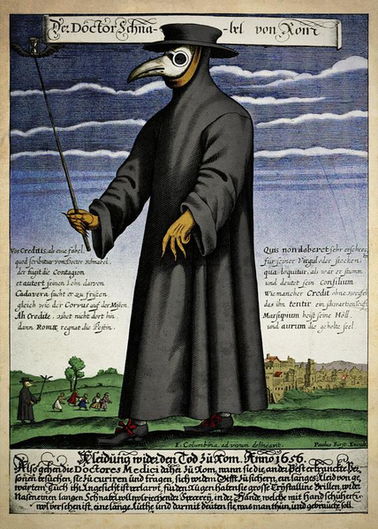
Bubonic Plague: Perhaps the most famous plague of them all! From plague doctor costumes to early biological warfare, we’ll cover everything you could want (and not want) to know about the Black Death.
This talk requires no medical or historical knowledge – just an appreciation for the diseases you won’t catch in your local grocery store.
Haunted History: The Age of the Witch Hunts
With Halloween just around the corner, this talk will focus on one of humanity’s oldest  fears: witches. But this time, it’s the witches who have a reason to be afraid.
Between 1450 and 1750, as many as 100,000 people in Europe and America – mostly women – were accused of practicing witchcraft. Although it was otherwise a period of advancement, a time of new discoveries, new inventions, and the Renaissance, it was also a period of superstition, paranoia, and religious hysteria. In this class, we’ll discuss how witch-hunts started, why they took off in some areas and not in others, and what it was like to be accused. The witch trials in Salem, Massachusetts are the most famous, but we’ll be focusing on lesser known cases like those in Würzburg (Germany, 1626-31), North Berwick (Scotland, 1590), and Torsåker (Sweden, 1675).
These true historical stories will fascinate – and horrify! – you.
The Boston Tea Party
Celebrate the 247 years of American history since the original Boston Tea Party! We’ll 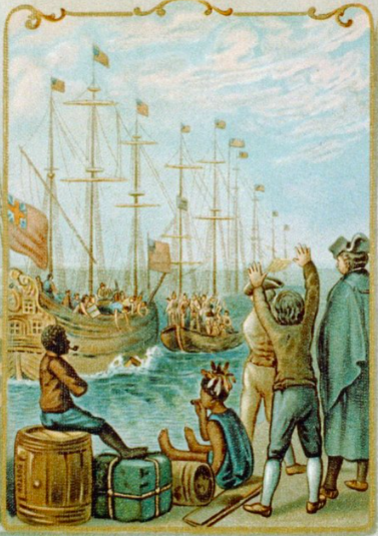 remember this important event that led to the founding of the United States with a talk that explores tea, revolution, and the East India Company.
Tea isn’t just a drink… and the Boston Tea Party wasn’t about doilies! This fascinating history includes wars, disguises, Dutch smugglers, and British colonies on multiple continents. In this talk, we’ll focus on the role tea played in the American Revolution. We’ll talk about George Washington’s favorite variety of tea, how to taste the tea dumped in Boston Harbor, and how the East India Company created a monopoly that allowed it to influence British politics.
This is the perfect class for both tea-lovers and history buffs!
Who Runs the (Ancient) World? Girls!
An evening about the stuff you should have learned in school, but which apparently got left out because it was just too much fun (also, sexism)!
In this lecture, we’ll talk about five women rulers of the ancient world. We’ll get into how gender roles worked in different societies, the multiple ways women were able to claim power, and how traditions of feminine leadership have shaped not just our past, but our future. Come to hear more about:

Enheduanna (around 2300 bce): A high priestess in Ancient Mesopotamia and the daughter of Sargon I, she helped her father to consolidate his hold over rebellious regions in the world’s first empire. Plus, she’s the oldest known author!
Hatshepsut (1507-1458 bce): A pharaoh of Ancient Egypt, she was one of its most successful rulers, excelling in the fields of trade, economics, and building. After her death, her successors attempted to hide her rule, nearly succeeding in erasing her from history.
Himiko (around 200 ce): A shaman and queen of early Japan, she united multiple warring communities and maintained power through her seemingly close connection to the gods. Her reign may be misremembered in stories of the legendary Empress Jingu.
Lady K’abel (late 600s ce): A queen of the Maya city of El Perú, she played an important part in the struggle for power between two feuding dynasties by leading armies and taking captives. She, and not her husband, was given the title Ix Kaloomte’, which translates to Supreme Warlord.
Mandukhai (1449-1510 ce): She raised the only surviving descendant of Genghis Khan – and then married him as a way of maintaining her control over the Mongol Empire. A fierce fighter, China expanded the Great Wall to protect itself from Mandukhai.
March is Women’s History Month, so it’s a wonderful time to learn more about the kick-ass women of the past. All genders are welcome, and no prior knowledge of history is needed. Whether you’re looking for personal inspiration, historical context, or just a fantastic edge at trivia night, this class is waiting for you.
The History of Vaccines: How the World Learned Not to Go Viral
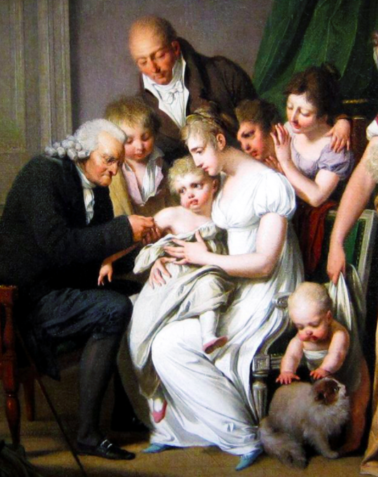
Vaccination is currently a hot topic in the media, but it isn’t anything new. From our earliest recorded history, humanity has faced the scourge of diseases like smallpox, rabies, and diphtheria. We have long battled to protect people – and animals! – from these and other illnesses. Historians have reason to believe that vaccination and inoculation to achieve these goals date back centuries.
In this class we’ll talk about the evidence for inoculation in 16th century China and in the ancient traditions of India, West Africa, and the Middle East; the 19th century invention of the rabies vaccine that still is the only effective treatment for the disease; and a heroic dog that raced across Alaska to save over a hundred children from diphtheria. We’ll also take a look at how inoculation helped George Washington win the U.S. war for independence. Finally, we’ll examine the early forms of anti-vaccination campaigning that emerged in the 18th and 19th centuries.
Get ready to get jabbed with knowledge in this fun, occasionally grisly, and informative class on how humanity keeps saving itself.
The Archaeology of Pumpkin Spice
Cinnamon, nutmeg, clove, and ginger: they blend together to form a delicious flavor that evokes cooler temperatures, flannel shirts, and falling leaves. But Pumpkin Spice wasn’t invented by Starbucks, and its history goes back much further than any pie.
In this talk, we’ll start by stirring together the trade in ginger in Ancient Rome, the importance of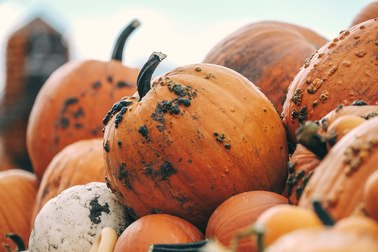 cloves in Ancient China, how cinnamon was tucked into the wrappings of Egyptian mummies, and how nutmeg was once used to buy the island of Manhattan. Next, we’ll add a dash of the evolution of pumpkins and their long path towards acceptance by European colonists in New England. Finally, we’ll mix in a cookbook from the 1700s with a recipe for “Pompkin Pudding” that hasn’t changed much in the two hundred and thirty years since. All together, it will make for a mouthwatering meal of history, culture, and biology!
You’ll come away with a new appreciation for Pumpkin Spice and the thousands of years that went into making your Christmas pie or autumn latte.
 Patty Hamrick